Gas appliances are convenient and efficient, but they carry real risks when connections, valves, or venting are not maintained correctly. Virginia addresses these risks through the Virginia Uniform Statewide Building Code, known as the USBC, which incorporates national fuel gas standards, along with the Statewide Fire Prevention Code, which governs detection requirements. Together these codes set the baseline every home in Falls Church and across Northern Virginia is expected to meet.
The Virginia Uniform Statewide Building Code and Gas Appliances
The USBC applies the International Fuel Gas Code with Virginia-specific amendments to residential gas installations statewide. This covers everything from the minimum clearance around a gas range to the sizing of gas piping serving multiple appliances. When a technician performs gas appliance repair on a range, dryer, or water heater, the applicable code sections determine what counts as a like-for-like repair versus a modification that requires permit review.
Gas Line Connectors — What's Allowed
Every gas appliance connects to the home's fixed piping through a connector, and Virginia code requires that connector to be listed and labeled for the specific appliance and gas type. Most residential kitchens use corrugated stainless steel connectors sized to the appliance's BTU rating. A connector that is too small restricts gas flow and can cause a burner to run inefficiently or an oven to underheat. Connectors also degrade with age and with repeated flexing when an appliance is pulled out for cleaning, which is why code treats them as wear items that should be replaced, not reused, whenever a stove or range is swapped out.
Shut-Off Valves: Location and Access Requirements
Code requires an accessible shutoff valve installed in the gas line ahead of each appliance, positioned so a homeowner or technician can reach it without moving the appliance itself. This valve lets you cut gas flow to a single appliance during a repair without shutting down gas service to the entire house. During service calls, our technicians routinely find shutoff valves that have been blocked by built-in cabinetry or buried behind a range that was pushed back too far during a prior installation, which is itself a code compliance issue that should be corrected.
When Gas Appliance Work Requires a Permit
A straightforward appliance swap that reconnects to the existing gas line at the same location, using a properly rated new connector, generally does not require a permit under Fairfax County or Falls Church City rules. The moment the work involves running new gas piping, relocating the shutoff valve, or adding a line to a location that never had gas service, a mechanical permit and inspection are required. This applies equally to a kitchen range, a gas dryer in a laundry room, and an outdoor kitchen or fire pit connection. Homeowners planning a kitchen remodel that repositions a gas range should confirm permit requirements before the installation begins, not after.
Carbon Monoxide Detector Requirements Under Virginia Law
Virginia's Statewide Fire Prevention Code requires carbon monoxide detection in homes with fuel-fired appliances, with specific requirements tied to new construction, appliance replacement, and rental properties. A functioning carbon monoxide detector should be installed on every level of the home with a fuel-burning appliance and outside sleeping areas. Detectors have a limited service life, typically five to seven years depending on the model, after which the sensor degrades and the unit should be replaced even if the alarm still appears to power on.
Warning Signs of a Gas Safety Problem
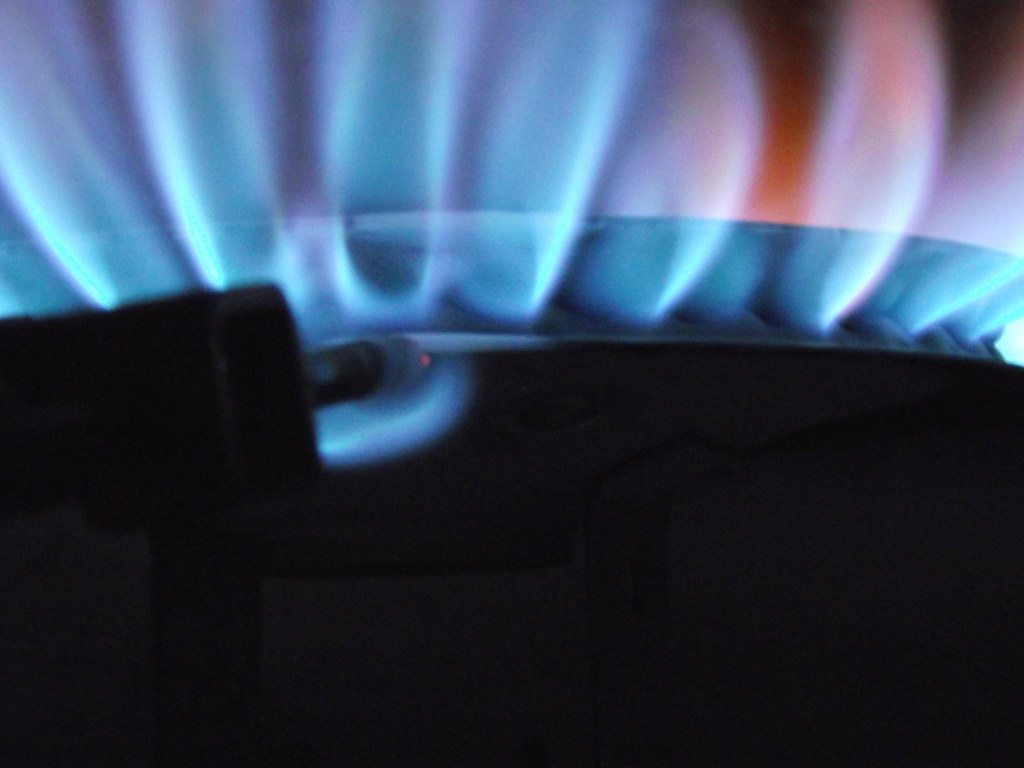
A gas appliance in good condition burns with a steady blue flame. A yellow or orange flickering flame indicates incomplete combustion, which can produce elevated carbon monoxide levels. Soot buildup around a burner or on the wall behind an appliance, a persistent rotten-egg smell (the additive used to make naturally odorless gas detectable), or a pilot light that will not stay lit are all signs that warrant a professional inspection rather than a wait-and-see approach. If your oven has a gas burner producing an uneven or yellow flame, that is a combustion problem, not a cosmetic issue.
What To Do If You Smell Gas
If you smell gas, leave the appliance alone. Do not attempt to diagnose or repair it yourself, and do not operate light switches or anything electrical near the source, since a spark can ignite an accumulation of gas. Leave the home, and once at a safe distance, contact your gas utility's emergency line. Once the utility confirms it is safe to return, a qualified technician can identify and repair the source. Homeowners across McLean and Vienna dealing with recurring gas odor complaints should treat every occurrence seriously rather than assuming it is the same minor issue as last time, since connectors and valves can fail in new ways even after a prior repair.
Keeping Gas Appliances Safe Between Inspections
Between professional service visits, a homeowner can do a simple visual check: look for cracked or corroded connectors, confirm the shutoff valve is accessible and turns freely, and make sure nothing flammable is stored against a gas appliance. Keep the area around gas dryers and ranges clear of lint, grease buildup, and stored boxes. If you ever need emergency appliance repair for a gas-related issue outside normal hours, treat any strong gas odor as reason enough to call immediately rather than waiting until morning.